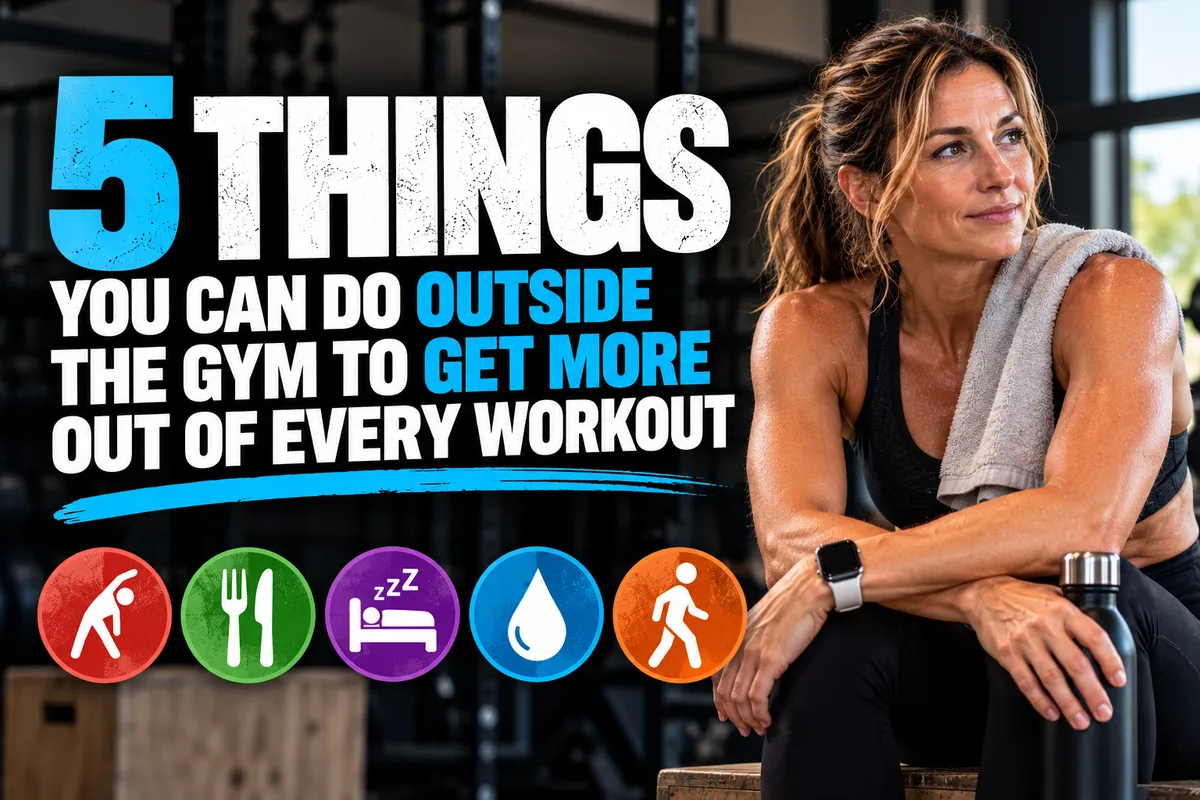
5 Things You Can Do Outside the Gym to Get More Out of Every Workout
Think about how much time, effort, and energy you invest in your fitness. You show up for class, challenge yourself, push through difficult workouts, and trust that all of that hard work is making you stronger, healthier, and more capable. But have you ever stopped to consider how much more you could be getting out of that investment?
One of the most important things to understand about exercise is that the workout itself is only part of what makes us stronger. Training is the stimulus needed for change, but it's during recovery that we adapt to those stimuli and become stronger, fitter, and more capable. And how well that happens depends largely on what we do during the other 23 hours of the day.
After nearly three decades of coaching, I've become convinced that almost everyone, from the newest beginner to the most accomplished athlete, could significantly improve their results without adding a single minute to their training schedule. The opportunity isn't necessarily to work harder. It's to do a better job supporting the work we're already doing.
Here are five simple things you can do outside the gym to make every hour you spend inside it more productive.
1. Spend 10 Minutes a Day Maintaining Your Body
We understand that our cars are machines and require regular maintenance to keep them working well–especially if we want them to work well for a long time. Yet somehow we expect our bodies (which are also machines…biological ones) to perform demanding physical tasks day after day without giving them much attention beyond the workout itself.
I'm a huge advocate of daily mobility and soft-tissue work. Foam rolling, massage balls, stretching, and targeted range-of-motion exercises have made a huge difference in how I feel and perform over the years. They can help manage soreness and increase the speed of our recovery.
But here's an important distinction: mobility work shouldn't simply be about making sore muscles feel better and helping with recovery. It should also be about identifying and improving the limitations that are holding you back.
If your ankles are stiff, your squat mechanics will suffer. If your shoulders lack overhead range of motion, pressing and Olympic lifting become more challenging. If your hips are constantly tight, you may find yourself compensating through your lower back.
Your assignment: Identify the two areas of your body that consistently feel restricted or problematic. Spend five minutes working on each, every day. If you don't know what to do, ask one of your coaches. We'll gladly help you build a routine specific to your needs.
Ten minutes isn't much, but ten minutes every day adds up to more than an hour of dedicated body maintenance every week.
2. Give Your Body the Nutrition It Needs to Adapt
You can have the best training program in the world, but if you're not providing your body with the raw materials it needs to recover and rebuild, you're limiting the results of that program.
Fortunately, improving nutrition doesn't have to begin with weighing every meal, counting every calorie, or following some complicated diet.
I'd start with three simple rules.
First, prioritize protein. For most healthy, active adults doing resistance training, approximately 0.8 grams of protein per pound of body weight is a reasonable daily target. For a 175-pound athlete, that's about 140 grams. Protein provides the building blocks required to repair and maintain muscle, and getting enough becomes especially important when we're trying to lose body fat without sacrificing strength.
Second, aim to get at least 80% of your food from whole or minimally processed ingredients. Think meat, fish, eggs, fruits, vegetables, potatoes, rice, beans, and other recognizable foods. This doesn't mean you can't enjoy pizza or dessert, protein bars or prepared meals. It means the foundation of your nutrition should come from foods that deliver meaningful nutritional value.
Third, eat the rainbow. Different-colored fruits and vegetables provide different combinations of vitamins, minerals, fiber, and beneficial plant compounds. If everything on your plate is boring to look at, there's probably room for improvement.
Your assignment: Track your protein intake for the next three days and see how close you're getting to your target. At the same time, challenge yourself to include fruits or vegetables with at least two meals and a snack each day. Also, highlight any processed foods on your menu and brainstorm some whole food replacements.
Don't worry about perfection. Start by improving the quality and consistency of what you're already eating.
3. Start Taking Your Sleep Seriously
If I could improve just one recovery habit for every athlete at CrossFit NorthGate, sleep would be a strong contender.
Sleep is when much of the repair and recovery process takes place. It's essential for muscle recovery, cognitive function, hormonal regulation, immune health, and our ability to perform at our best. Poor sleep also makes it harder to regulate appetite, manage stress, and maintain the motivation to make healthy choices.
Yet many people will regularly crush themselves in the gym to get results while routinely sacrificing an hour or two of sleep to watch television or scroll through their phones. Go to sleep. Even if you just get to sleep 15 minutes earlier, that means that you’re getting 1:45 more sleep every week, which adds up to over 90 more hours of sleep per year. That’s enough to move the needle!
To get the best sleep possible, start with the fundamentals. Keep your bedroom cool, dark, and quiet. Establish consistent bedtimes and wake times. Reduce bright-screen exposure before bed and avoid eating within 2-3 hours of bedtime. Be mindful of afternoon caffeine and evening alcohol.
There are supplements worth exploring, too. Magnesium glycinate is one option, and compounds such as apigenin and inositol are sometimes included in sleep-support routines. If you are going to play with creating a sleep stack, start one at a time so you can notice what makes a difference and be mindful. There are some influencers out there who have many recommendations including Andrew Huberman, James Dinicalantonio and Tim Ferris to name a few.
Your assignment: For the next week, establish a bedtime that allows for at least eight hours in bed. Make your bedroom as conducive to sleep as possible and give yourself a consistent 30-minute wind-down routine (this is a great time for mobility).
You might be surprised how much better your workouts feel when you arrive genuinely recovered.
4. Hydrate Like Your Performance Depends on It. Because It Does.
This one amazes me because it's such low-hanging fruit.
Water is essential for circulation, temperature regulation, digestion, and normal muscle function. Even modest dehydration can make exercise feel harder, particularly during longer or hotter workouts.
And yet, I regularly encounter athletes who show up for class having consumed little more than coffee all morning.
A simple planning target for some active adults is approximately 0.6 ounces of fluid per pound of body weight each day. For a 180-pound athlete, that's roughly 108 ounces. This isn't a universal prescription, and your actual needs will depend on your sweat rate, diet, the weather, training volume, and individual health. But having a reasonable target is often much better than drinking randomly whenever you remember.
The trick is to distribute your fluid intake throughout the day rather than trying to catch up during your workout. And if you're training hard in the heat or sweating heavily, replacing sodium and other electrolytes may also be important.
I do a lot of sweating (between workouts and sauna) and talk a lot at the gym, so my hydration needs are more demanding than for some, so I start every day with about 30oz of water with electrolytes and creatine and have noticed a very positive shift as a result.
Your assignment: Figure out how much water your favorite bottle holds and how many refills you need to reach an appropriate daily target. Start hydrating early, pay attention to thirst and urine color, and make it a habit rather than an afterthought.
It's one of the simplest things you can do to support both your training and recovery.
5. More Active Recovery When You're Not Working Out
This one might seem counterintuitive. If you're already doing CrossFit four or five days a week, why would I encourage you to exercise more?
Because I'm not necessarily talking about exercise. I'm talking about movement, specifically: active recovery.
It's entirely possible to complete a demanding workout in the morning and then spend the remaining 12 hours sitting at a desk, driving, or relaxing on the couch. That hour in the gym is valuable, but it doesn't erase the effects of being largely sedentary throughout the rest of the day.
Walking is one of the simplest ways to change that. It increases daily energy expenditure, supports cardiovascular and metabolic health, and gives us an opportunity to move without adding significant training stress. A short walk after a meal can also help moderate the rise in blood glucose that follows eating.
And unlike another high-intensity workout, walking generally doesn't require much recovery.
Sauna is another great tool. And while we are just sitting in the sauna (so this isn’t actually active recovery), there is quite a lot of movement happening on the inside of the body. The heart and circulatory system are working to keep us cool so this should qualify as active recovery.
Your assignment: Add a 10-minute walk after lunch or dinner every day. If you already walk regularly, challenge yourself to increase your average daily steps by 2,000.
This also provides a great excuse to get outside more. Enjoy some sunshine, fresh air, and a little time away from your phone. There are benefits to that habit that extend well beyond fitness.
If you haven’t tried the sauna, you can certainly find benefits once per week. However, research has found that the more frequently you use sauna, the more results you'll enjoy. I find the sweet spot for me to be 3-4 sessions a week.
The Bigger Picture
Here's what I hope you'll take away from all of this.
Your results aren't determined solely by how hard you work during class. They're influenced by everything you do to support that work. Your nutrition provides the building materials. Your sleep allows you to recover. Your hydration supports performance. Your mobility work helps maintain movement quality. And your daily activity supports the health and capacity you're working so hard to build.
None of these habits is particularly complicated, and that's precisely why they're so easy to underestimate. We're constantly looking for the next training program, supplement, or breakthrough that will take our fitness to another level, while overlooking the fundamentals that make all of those things effective.
So here's my challenge: Don't try to overhaul your entire life tomorrow. Pick the one area where you know you're falling short and commit to improving it for the next seven days. Once that becomes consistent, tackle another.
If you're already investing four or five hours a week training at CrossFit NorthGate, you owe it to yourself to make those hours count.
Before deciding you need to do more work, make sure you're getting everything you can out of the work you're already doing.
Train hard. Recover well. Give your body what it needs to adapt.
You may discover that your next big breakthrough doesn't require another hour in the gym.
It requires making better use of the other 23.
In health,
Coach Parker
